
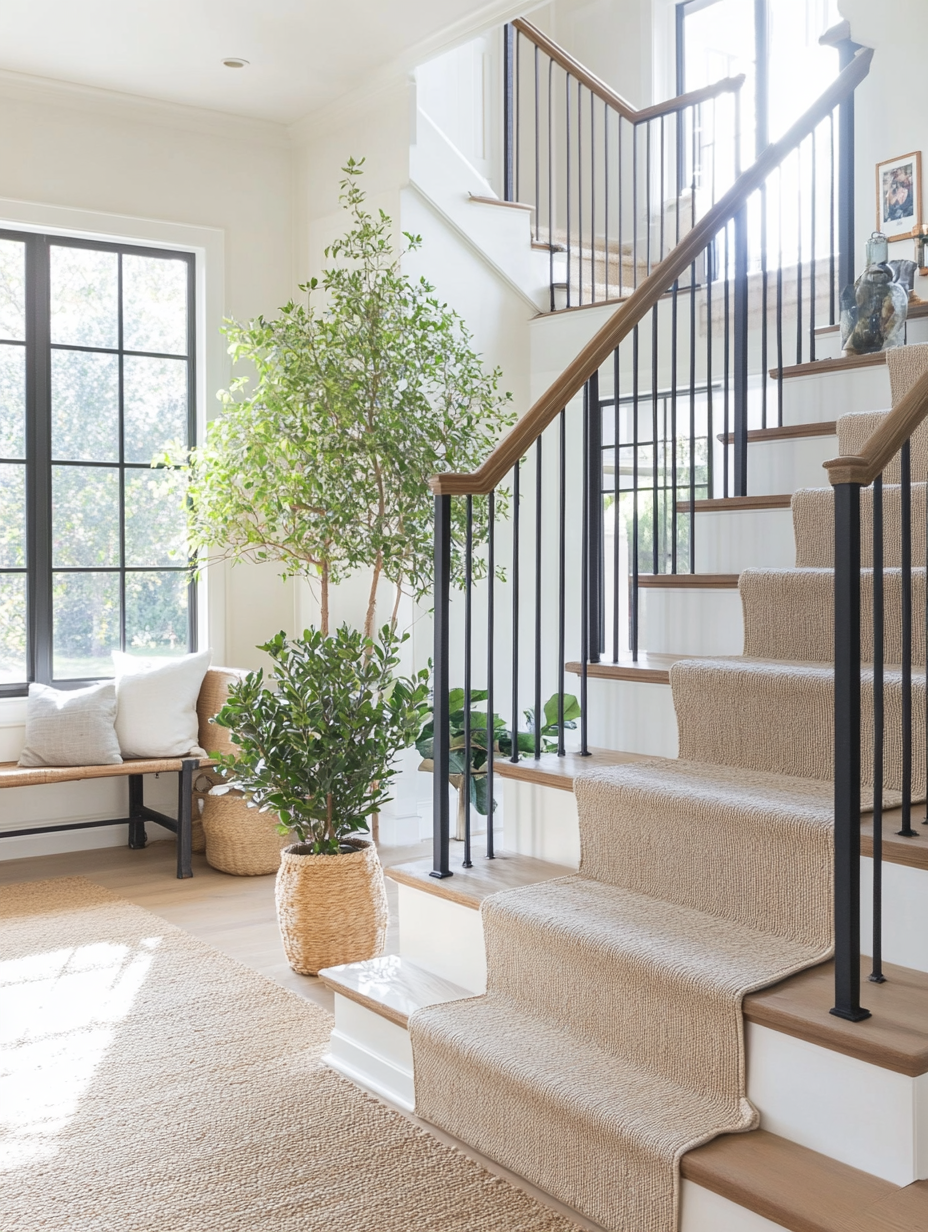
Your stairwell is one of the most traversed spaces in your home — and one of the most overlooked. It’s not just a way to get from one floor to another; it’s a vertical gallery, a transition moment, a design opportunity hiding in plain sight. Whether your stairwell is a tight, awkward passage or a sweeping architectural feature, a thoughtful renovation can make it feel intentional, elevated, and completely yours.
Here are 15 stairwell renovation ideas — from quick cosmetic updates to more committed transformations — that will make you fall in love with the space you walk through every single day.
1. Repaint the Walls (And Don’t Play It Safe)

Fresh paint is the most accessible stairwell upgrade, but the magic is in how you use it. Rather than defaulting to the same wall color running throughout your home, treat the stairwell as its own contained space — one that can handle something more dramatic.
Deep moody tones like forest green, navy, charcoal, or terracotta create a sense of intimacy and intention. For an Japandi or organic modern aesthetic, earthy clay tones or warm whites with strong undertones (think Benjamin Moore’s White Dove or Sherwin-Williams’ Accessible Beige) add warmth without overwhelming. Don’t forget the ceiling — painting it the same color as the walls creates a cocooning effect that feels surprisingly luxurious.
Pro tip: In a stairwell, paint the risers (the vertical face of each step) a contrasting or complementary color to your wall for a layered, editorial look.
2. Upgrade Your Railing

Nothing dates a stairwell faster than builder-grade oak railings with basic spindles. A railing upgrade is one of the highest-impact changes you can make — and it doesn’t always require a full replacement.
Ideas to consider:
- Swap spindles for cable or rod railing for a sleek, airy modern look that opens up the space
- Paint existing wood railings in black, white, or a dark accent color — a single coat can completely modernize the vibe
- Replace with wrought iron or powder-coated steel for a more artisan, organic modern feel
- Install a chunky wood handrail (walnut or white oak are having a major moment) over an existing metal bracket system
The railing is essentially the furniture of your stairwell — it deserves the same thoughtfulness.
3. Rethink Your Stair Treads

The surface you step on every day is another area ripe for reinvention. Whether you’re working with carpet-covered treads, worn hardwood, or hollow-sounding builder laminate, there are several directions to consider.
- Hardwood treads in white oak or walnut add warmth and visual weight — great for organic modern or Scandinavian-leaning homes
- Painted treads in a high-contrast color (typically black or deep navy) against white risers is a classic, timeless look — especially beautiful in traditional or coastal-inspired homes
- Natural stone or tile on straight-run stairs offers a clean, Mediterranean or contemporary edge
- Stair tread overlays are a budget-friendly option that installs directly over existing surfaces without a full tear-out
Mix and match: painted risers, natural wood treads, and a contrasting railing color can create a beautifully layered staircase without touching the walls.
4. Add Shiplap, Wainscoting, or White Panel Millwork

Panel millwork on stairwell walls is one of the most enduring and versatile design choices you can make. It adds texture, architectural interest, and a finished quality that reads as custom — even when it’s DIY.
Options at different investment levels:
- Classic wainscoting (chair-rail height paneling) anchors the lower portion of the wall in a traditional or transitional home
- Board and batten creates clean vertical lines that feel both casual and refined — especially popular in Scandinavian and modern farmhouse styles
- Shiplap adds horizontal layering with a relaxed, organic quality
- Full-height fluted or flat panel millwork running from floor to ceiling reads as high-design and pairs beautifully with a bold paint color layered on top
For a cohesive Japandi or organic modern aesthetic, keep panel finishes matte and tone-on-tone. For something more editorial, contrast bright white paneling against a deeply saturated wall paint.
5. Carpet vs. No Carpet — A Design (and Lifestyle) Decision

The carpet-or-no-carpet question is one of the most debated stairwell choices, and honestly, there’s no objectively right answer — it depends on your household, your aesthetic, and your relationship with noise.
The case for carpet or stair runners:
- Significantly reduces noise (critical in multi-story homes)
- Adds warmth, texture, and a collected, layered feeling
- Safer for kids, elderly family members, and pets
- A patterned runner can become a true design focal point
The case for bare treads:
- Cleaner, more contemporary look
- Easier to maintain and keep dust-free
- Shows off beautiful wood or tile craftsmanship
- Works better for homes leaning minimalist or modern
The middle ground: a stair runner A runner — a strip of carpet or woven material centered on the treads — is the best of both worlds. It softens sound, adds visual warmth, and lets you incorporate pattern or texture while still showing the beauty of your treads on either side. Jute, wool flatweaves, and patterned cut-pile runners are all having a major moment and suit everything from bohemian to traditional to modern homes.
6. Create an Accent Wall

If your stairwell has one dominant wall (often the wall that runs parallel to the stair’s rise), treat it as your accent wall canvas.
Ideas that work beautifully in stairwells:
- Wallpaper — a botanical, geometric, or textural wallpaper in a stairwell creates a dramatic, gallery-like effect without overwhelming a full room. A climbing vine pattern, abstract organic print, or classic stripe are all strong choices
- Limewash or Venetian plaster for an artisan, slow-design finish with incredible depth
- A mural — painted directly on the wall, an oversized botanical or abstract mural becomes the art
- Peel-and-stick tile in a cement or Moroccan pattern on the accent wall adds pattern without the permanence of traditional tile installation
The stairwell accent wall is a rare opportunity to be bolder than you might be in a living room or bedroom, because it’s a transitional space — you pass through, you don’t live in it. Go for it.
7. Light It Thoughtfully

Lighting is the most underestimated stairwell renovation decision. Most stairwells are lit by a single overhead fixture — functional, but far from beautiful.
Upgrade ideas:
- Stair tread lighting — LED strips or individual step lights installed into risers provide a warm, ambient glow and add a sophisticated, architectural feel (they also improve safety)
- Wall sconces installed at regular intervals along the stairwell create a gallery-like rhythm
- A statement pendant or chandelier visible from the entry or landing makes a grand architectural impression in open stairwells
- Picture lights over framed artwork guide the eye upward and create a vertical gallery experience
Layering two or three light sources (ambient overhead + task-level step lights + accent lighting on artwork) transforms the stairwell into something you actually stop and notice.
8. Style a Gallery Wall

The vertical expanse of a stairwell wall is one of the best gallery wall locations in the home — the ascending line of the stair creates a natural diagonal arrangement that feels dynamic and curated.
How to make it work:
- Mix frame sizes and orientations, but keep a consistent frame color (all black, all natural wood, or all white) for cohesion
- Combine photography, illustrations, botanical prints, and mirrors for variety
- Lay out your arrangement on the floor before committing to nails
- Use picture-hanging strips for smaller frames to avoid wall damage
For a more contemporary look, lean into a single oversized piece rather than a grid — one large abstract print or botanical panel creates a strong moment without requiring a gallery arrangement.
9. Install Open or Floating Shelving

In wider stairwell landings or beneath a staircase, open shelving transforms dead wall space into functional display.
Floating shelves along the stairwell wall are a natural home for small potted plants, framed photos, ceramic objects, and books — essentially a vertical bookcase that doubles as decor. This approach works particularly well in Japandi-inspired spaces where the objects themselves are carefully curated and meaningful.
Under-stair built-in shelving is a more committed transformation, but it maximizes otherwise wasted space for books, storage baskets, or a small reading nook.
10. Add a Bold Wallpaper Ceiling

Wallpaper on the stairwell ceiling is unexpected, intimate, and completely memorable. Because the stairwell ceiling is lower and more contained than a main room ceiling, it’s an ideal place to introduce pattern overhead without feeling overwhelming.
Botanical prints, starry night prints, or geometric patterns work especially well. Pair a patterned ceiling with quiet, neutral walls for balance — or go tone-on-tone for an immersive, maximalist effect
11. Introduce Plants and Biophilic Moments

Bringing in living material along your stairwell activates the senses and creates an organic, layered feeling that’s central to both Japandi and organic modern design.
- Hang trailing plants (pothos, string of pearls, trailing philodendron) from high shelves or hooks — they create gorgeous cascading lines that echo the movement of the stair
- Install a slim planter ledge along a landing or half-wall for potted greenery
- Place a large floor plant (fiddle leaf fig, olive tree, tall snake plant) on a landing to fill vertical space and create a focal moment
- Consider preserved moss panels for a maintenance-free biophilic wall treatment
The key in a stairwell is choosing plants that thrive in indirect light and can tolerate fluctuating conditions — trailing and hanging varieties tend to perform best.
12. Try Patterned or Painted Risers

This is one of the most transformative yet affordable DIY stairwell updates you can do. The risers — the vertical faces between each tread — are typically invisible or ignored, but when given attention, they become a subtle design detail that rewards a second look.
Options:
- Paint risers in a contrasting color to your treads — classic black-and-white is timeless, but dusty blue, terracotta, or sage green can be equally striking
- Apply peel-and-stick tile or wallpaper to each riser for a patterned, artisan effect — a cement-look tile or classic encaustic pattern is especially beautiful
- Use stencils to add a repeating motif to painted risers
Alternating painted risers (every other one in a contrasting color) is a particularly playful and dynamic option for a more bohemian or eclectic aesthetic.
13. Incorporate Mirrors

Mirrors in a stairwell serve two functions: they reflect light into what is often a dim, enclosed space, and they create the illusion of more depth and width than actually exists.
- A series of leaning or hung mirrors in mismatched frames reads as collected and editorial
- A single large arched or round mirror on a landing makes a strong architectural statement
- Antiqued or smoked mirrors add character and warmth compared to standard clear glass
For narrow stairwells especially, a well-placed mirror can make the space feel twice as generous.
14. Upgrade the Hardware and Finishing Details

This is the “jewelry” of the stairwell renovation — the small details that signal intentionality and craft.
- Swap door hardware on any stairwell-adjacent doors to match your railing finish (brass, matte black, brushed nickel)
- Upgrade newel post caps — these sit at the top and bottom of the railing and can be swapped for more architectural versions
- Add baseboard and crown molding if your stairwell currently lacks them — even simple profiles add a finished quality
- Replace basic light switch covers with designer plates in brushed brass or matte black
These are small investments with outsize visual impact — they’re what separate a renovation that feels complete from one that feels like it stopped too soon.
15. Apply Limewash or Textured Paint

Beyond standard paint, limewash and textured paint finishes offer a depth and movement that flat paint simply can’t match — and they’re especially well-suited to stairwells because you experience them up close.
Limewash creates a layered, aged patina that looks like it belongs in a centuries-old Italian villa. It works beautifully with natural stone, warm wood tones, and linen textures — and it’s become one of the defining finishes of the organic modern and Mediterranean revival aesthetics.
Venetian plaster offers a higher-gloss, ultra-smooth finish with incredible depth — it looks different in every light and rewards close inspection.
Both finishes can be DIY-applied over properly prepared walls, though professional application yields the most nuanced results.
Where to Start: A Renovation Sequence That Makes Sense

If you’re planning a more comprehensive stairwell refresh rather than a single update, here’s the order of operations that makes the process efficient:
- Structure first — address any repairs to treads, risers, or railing posts before cosmetic work
- Millwork and paneling — install any wainscoting or board-and-batten before painting
- Paint — walls, ceiling, and risers before any finishing
- Flooring — new treads or runner installation after paint is fully cured
- Lighting — install new fixtures and step lights
- Hardware and details — railing upgrades, newel caps, switch plates
- Decor — gallery wall, plants, mirrors, shelving
Final Thoughts
The stairwell is one of the few spaces in a home that you never linger in, which is precisely what makes it such a compelling design canvas. When it’s done well, it becomes a curated experience — a small journey within the larger journey of your home. Every element you choose should feel intentional, layered, and reflective of your overall aesthetic vision.
Whether you tackle one idea from this list or all fifteen, the goal is the same: to make the overlooked feel considered, and the functional feel beautiful.
Have questions about your stairwell renovation? Drop them in the comments below — or tag us on Pinterest @hausandhom to share your before and afters.