
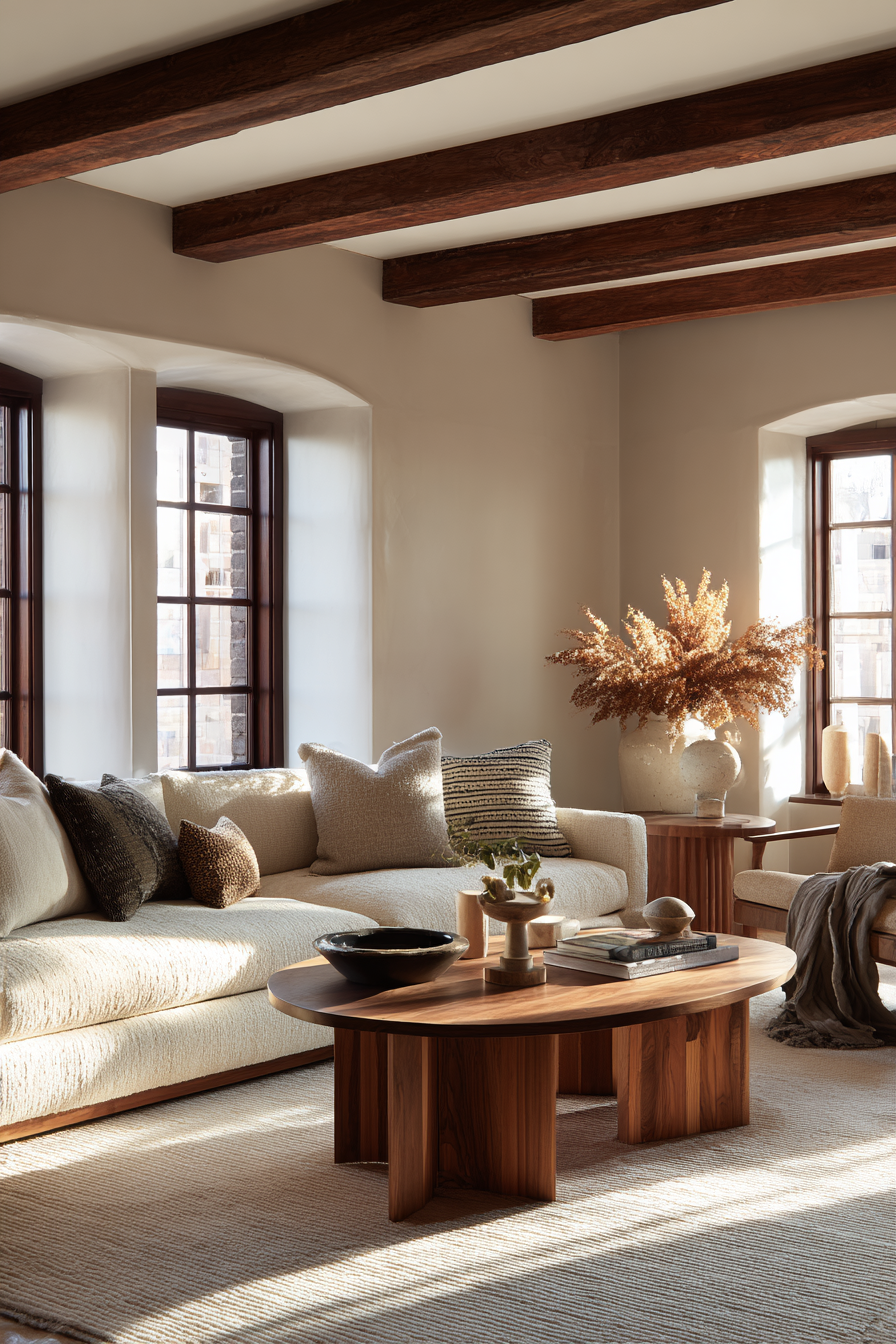
Wood tones can completely change the feeling of a home. Even with the exact same furniture layout, switching from light oak finishes to deep walnut tones can make a space feel airy and relaxed — or rich, grounded, and dramatic.
And while trends tend to swing back and forth between lighter and darker woods, the truth is neither is inherently “better.” The right choice depends on the atmosphere you want to create, the architecture of your home, your lighting conditions, and how you want the space to emotionally feel day-to-day.
If you’ve been struggling to decide between dark wood furniture and lighter wood tones, here’s how to determine which direction makes the most sense for your home and personal style.

The Overall Difference Between Light and Dark Wood Furniture
At the most basic level, light wood furniture tends to create spaces that feel:
- Airy
- Casual
- Organic
- Relaxed
- Minimal
- Scandinavian-inspired
- Coastal or Mediterranean leaning
Meanwhile, darker wood furniture creates spaces that feel:
- Rich
- Grounded
- Sophisticated
- Moody
- Traditional or collected
- Elevated
- More architectural
Neither style is exclusive to one design aesthetic either. A modern home can absolutely incorporate dark wood tones, just like a traditional home can feel fresh and updated with lighter woods.
The real key is understanding the mood you want the room to create.
When Light Wood Furniture Works Best

Light wood furniture has dominated interiors for the last several years for a reason. It instantly brightens spaces and tends to feel approachable and timeless when done correctly.
This category typically includes:
- White oak
- Ash wood
- Blonde woods
- Pale walnut
- Natural oak finishes
- Light maple
These woods pair beautifully with:
- Warm white walls
- Cream and beige palettes
- Linen textures
- Travertine and limestone
- Plaster or limewash walls
- Soft organic modern interiors
Light wood furniture is especially ideal if your home:
- Lacks natural light
- Feels visually heavy already
- Has lower ceilings
- Leans modern or minimalist
- Has smaller rooms
- Uses a lot of warm neutrals
One of the biggest advantages of lighter woods is flexibility. They tend to blend seamlessly into spaces without overpowering them, making them easier to layer over time.
Styles That Pair Well With Light Wood Furniture
Organic Modern
Light oak furniture is practically foundational in organic modern interiors. Pair it with textured fabrics, creamy walls, warm metals, and natural stone for a layered but calming look.

Scandinavian Design
Scandinavian spaces often rely on pale woods to reflect light and maintain a soft, minimal atmosphere.

Modern Mediterranean
Light wood balances beautifully against plaster walls, rustic stone, arched details, and earthy materials often seen in Mediterranean-inspired homes.

Japandi Interiors
Japandi design leans heavily into natural simplicity, making lighter woods a natural fit.

The Downsides of Light Wood Furniture
While beautiful, lighter woods can sometimes make spaces feel:
- Too washed out
- Flat
- Overly minimal
- Sterile if paired with cool whites
- “Pinterest perfect” instead of lived-in
This is especially true when every surface in the room sits in the same tonal range.
One of the biggest mistakes people make with light wood furniture is avoiding contrast altogether. Rooms still need visual depth. Without darker accents, layered textures, or grounding elements, spaces can start feeling unfinished.
That’s part of why darker woods are beginning to make a strong comeback.
Why Dark Wood Furniture Is Returning
After years of ultra-light interiors dominating social media, many homes started feeling visually identical. Darker woods are returning because they instantly add warmth, contrast, depth, and personality.
This doesn’t necessarily mean heavy red-toned espresso finishes from the early 2000s are returning. The newer version of dark wood feels softer and more refined.

Think:
- Walnut tones
- Chocolate browns
- Smoked oak
- Deep natural woods
- Matte espresso finishes
- Rich mid-tone woods with visible grain
Dark wood furniture creates a home that feels layered and collected rather than overly styled.
When Dark Wood Furniture Works Best
Dark wood furniture works especially well when you want your home to feel:
- Cozy
- Sophisticated
- Architectural
- Moody
- Collected over time
- More luxurious
It’s particularly beautiful in:
- Historic homes
- Homes with lots of natural light
- Rooms with taller ceilings
- Spaces that need contrast
- Neutral interiors that feel too flat
Dark woods also photograph incredibly well because they naturally create visual depth and dimension.

Styles That Pair Well With Dark Wood Furniture
Transitional Interiors
Dark woods help transitional spaces feel timeless and elevated without feeling overly traditional.

Moody Organic Modern
One of the biggest shifts happening right now is organic modern interiors incorporating deeper wood tones instead of only pale oak.

European-Inspired Interiors
Many European homes layer darker woods effortlessly with plaster walls, vintage pieces, and natural stone.

Mid-Century Modern
Walnut furniture has always been foundational in mid-century interiors and still feels incredibly relevant today.

The Downsides of Dark Wood Furniture
Dark wood furniture can sometimes feel:
- Too heavy in small rooms
- Formal if overused
- Dated if paired with orange or red undertones
- Visually overwhelming in low-light spaces
This is why balance matters so much.
Dark wood works best when layered with:
- Softer textiles
- Warm whites
- Cream upholstery
- Stone textures
- Natural light
- Lighter flooring or walls
The goal is contrast — not darkness everywhere.
Can You Mix Light and Dark Wood Furniture?

Absolutely — and in many cases, mixing wood tones actually creates a more elevated and natural-looking home.
Perfectly matching wood finishes throughout a house can sometimes feel overly staged. Real homes tend to have variation.
The key is keeping undertones cohesive.
For example:
- Warm oak pairs beautifully with walnut
- Ashy gray woods pair better with cooler browns
- Rich walnut pairs well with creamy neutrals
- Honey woods work well with earthy Mediterranean palettes
The mistake is mixing woods with completely competing undertones.

How to Decide Which Wood Tone Is Right for You
If you’re still unsure, ask yourself these questions:
Do You Want Your Home to Feel Calm or Grounded?
- Light woods = airy and calming
- Dark woods = grounded and cozy
How Much Natural Light Does Your Home Get?
- Low light spaces often benefit from lighter woods
- Bright homes can handle deeper tones beautifully
What Feeling Are You Drawn To?
- Minimal and relaxed?
- Rich and layered?
- Soft and organic?
- Collected and dramatic?
Your emotional response to a space matters more than trends.
What Existing Finishes Are Staying?
Consider:
- Flooring
- Cabinet colors
- Wall color
- Countertops
- Architectural style
Your furniture should complement the home rather than fight against it.
The Best Approach for Most Homes
For most homes, the sweet spot is actually a balance of both.
Using lighter foundational pieces while layering in darker wood accents often creates the most timeless result.
For example:
- Light oak dining table with darker dining chairs
- Cream living room with walnut coffee tables
- White oak cabinetry paired with darker vintage wood furniture
- Light neutral bedroom layered with darker wood nightstands
This creates dimension while still maintaining warmth and cohesion.

Final Thoughts
At the end of the day, choosing between light and dark wood furniture isn’t really about trends — it’s about how you want your home to feel.
Light woods tend to create softness, openness, and ease. Dark woods create richness, contrast, and depth.
And increasingly, the most beautiful homes are learning how to combine both.
Instead of trying to perfectly match every finish, focus on creating balance, warmth, and visual layering throughout the space. That’s what ultimately makes a home feel timeless.
This post may contain affiliate links. If you make a purchase through these links, we may earn a small commission at no extra cost to you.