
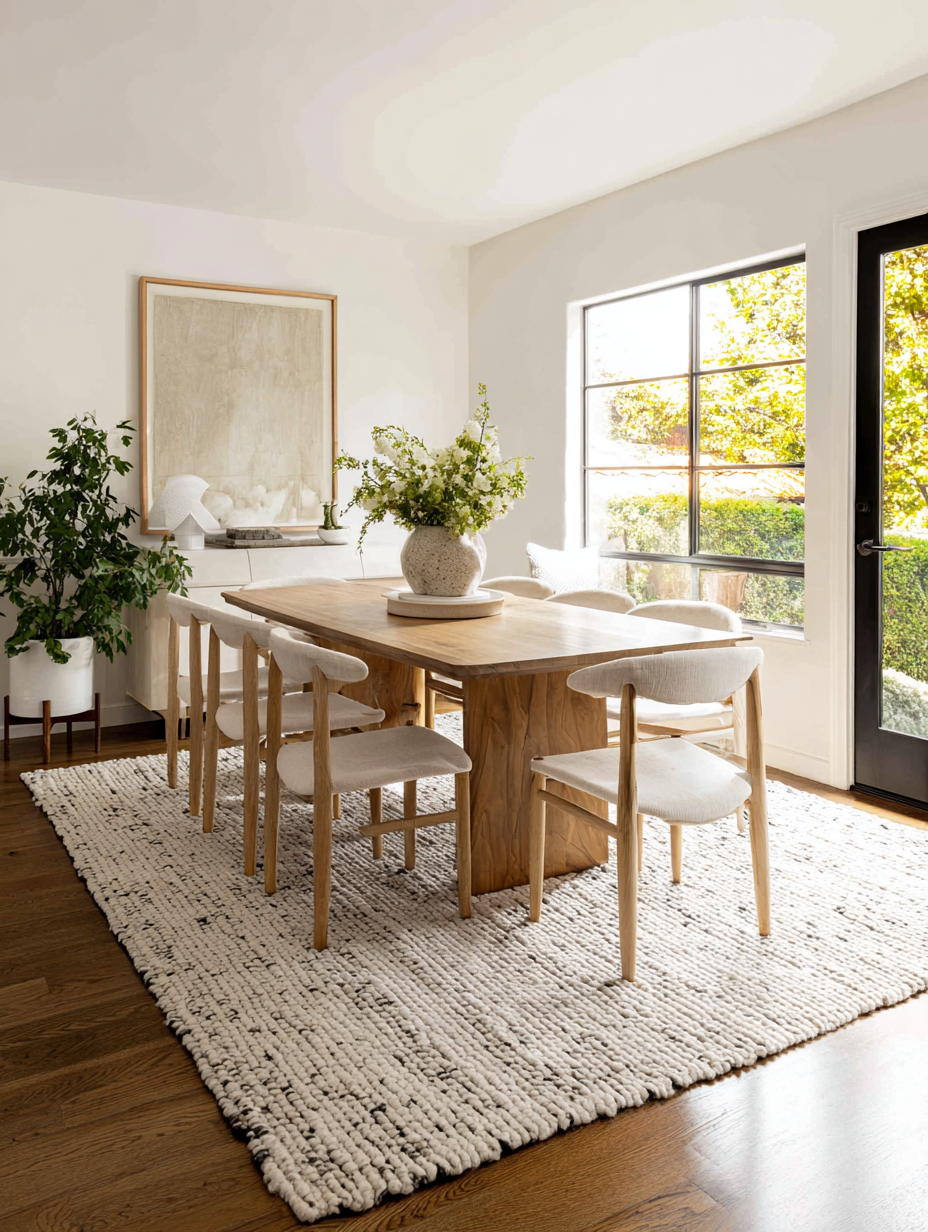
A dining room rug does more than simply decorate the space — it anchors the dining table, adds warmth, and helps define the room visually. The right rug can make a dining room feel polished and intentional, while the wrong rug size or material can quickly become frustrating and impractical.
Whether you’re designing a formal dining room or styling a small dining nook, choosing the right rug requires considering size, material, durability, and overall aesthetic. With chairs constantly moving in and out, dining room rugs need to be both beautiful and functional.
If you’re searching for dining room rug ideas this guide will walk you through everything you need to know — from rug sizing rules to the most popular styles designers love right now.

Why a Rug Works in a Dining Room
Many people assume dining rooms shouldn’t have rugs because of spills and crumbs, but a rug can actually make a dining space feel more complete.

A well-chosen dining room rug can:
- visually anchor the dining table
- add texture and warmth to the room
- reduce noise and echo
- define the dining area in open floor plans
- create a layered, designer look
In open concept homes especially, rugs help create a clear boundary between the dining area and the surrounding kitchen or living room.

The Most Important Rule: Dining Room Rug Size
One of the most common mistakes people make is choosing a rug that is too small for the dining table.
When chairs are pulled out, they should still remain on the rug. If the rug is too small, chair legs will constantly catch on the edge, which can be frustrating and damaging to the rug.
A good rule of thumb is to allow at least 24 inches of rug space beyond the table on all sides.

Typical Dining Room Rug Sizes
6×9 rug
Works best for:
- small dining tables
- four-person tables
- compact dining spaces
8×10 rug
The most common size for dining rooms and works well with:
- rectangular tables
- six-person tables
- medium sized dining rooms
9×12 rug
Best for:
- larger dining rooms
- eight-person tables
- formal dining spaces
Choosing the right size rug instantly makes the dining room feel more intentional and balanced.
Round Rugs for Round Dining Tables
Round rugs are an excellent choice when paired with a round dining table.
This pairing creates visual harmony because the shapes mirror each other. Round rugs also soften the room and work especially well in smaller dining areas or dining nooks.
A round rug is perfect for:
- pedestal dining tables
- small dining rooms
- breakfast nooks
- banquette seating layouts
For most round tables, an 8-foot round rug is the most common size.

Neutral Rugs for Organic Modern Dining Rooms
Neutral rugs are one of the most popular choices in modern dining room design.
Soft tones like beige, taupe, cream, and warm gray create a calm backdrop that allows the dining table and lighting to become the focal points.
Neutral rugs work beautifully in:
- organic modern interiors
- Japandi spaces
- Scandinavian inspired homes
- minimalist dining rooms
Popular materials include wool, jute, and cotton blends that add subtle texture without overwhelming the space.

Natural Fiber Rugs
Natural fiber rugs are a favorite among designers because they add warmth and texture while remaining understated.
Common natural fiber options include:
- jute rugs
- sisal rugs
- seagrass rugs
These rugs pair beautifully with wooden dining tables and neutral color palettes.
However, natural fiber rugs can sometimes be harder to clean, so they work best in homes where spills are less frequent or where a rug pad is used for added protection.
Vintage Rugs for Character
Vintage and Persian-style rugs are a timeless choice for dining rooms because they add personality and richness to the space.
Unlike plain rugs, vintage rugs often feature intricate patterns and faded colors that help disguise stains and wear over time.
Popular dining room vintage rug colors include:
- faded red and rust tones
- deep navy and indigo
- muted terracotta
- antique gold
Vintage rugs are particularly beautiful in homes that blend modern furniture with traditional elements.

Patterned Rugs for Busy Dining Areas
If your dining room sees a lot of daily use, a patterned rug can be a practical choice.
Patterns naturally help hide crumbs, spills, and everyday wear.
Popular patterned rug styles include:
- geometric rugs
- Moroccan rugs
- tribal rugs
- vintage Persian patterns
These rugs add visual interest while remaining functional for high-traffic spaces.

Flatweave Rugs for Easy Cleaning
Flatweave rugs are often the best option for dining rooms because they are durable and easy to maintain.
Unlike plush rugs, flatweave rugs do not trap crumbs as easily and allow chairs to slide in and out more smoothly.
Advantages of flatweave rugs:
- easy to vacuum
- lower profile for chair movement
- durable for high traffic areas
- often more affordable than thick wool rugs
Flatweave rugs are particularly common in modern and Scandinavian dining rooms.

Layering Rugs in the Dining Room
Layering rugs is a popular interior design technique that adds depth and visual interest to a room.
In dining spaces, this often involves placing a smaller decorative rug on top of a larger neutral base rug.
For example:
- large jute rug as the base layer
- smaller vintage rug layered on top
This creates a relaxed, designer look that works especially well in organic modern interiors.

Choosing the Right Rug Material
Because dining rooms are high-use areas, rug material matters.
Some materials are more durable and easier to clean than others.
Wool Rugs
Wool rugs are durable and naturally stain resistant. They are one of the most popular choices for dining rooms because they balance softness with durability.
Synthetic Rugs
Synthetic rugs made from materials like polypropylene are highly stain resistant and often easier to clean.
These rugs are a great option for families or homes with pets.
Cotton Rugs
Cotton rugs are lightweight and easy to clean, but they may wear out faster in high-traffic areas.
Choosing the right material depends on your lifestyle and how frequently the dining room is used.
Dining Room Rug Placement Tips
Placement matters just as much as size.
When positioning a rug under a dining table, make sure the rug is centered with the table and aligned with the room.

Helpful placement tips include:
- ensure chairs remain on the rug when pulled out
- keep the rug centered beneath the table
- allow even spacing around the edges
- use a rug pad to prevent sliding
These small adjustments help the dining room feel balanced and polished.
Dining Room Rug Colors That Designers Love
The best rug colors often depend on the style of your home.
Popular designer-approved dining room rug colors include:

Warm neutrals
Cream, beige, and taupe rugs are timeless and versatile.
Earthy tones
Terracotta, olive, and clay tones create warmth and depth.
Soft blues
Muted blue rugs pair beautifully with wood furniture and brass lighting.
Vintage reds
Classic Persian rugs often feature faded reds that add character to the space.
Choosing a color that complements the dining table and lighting helps create a cohesive look.
Common Dining Room Rug Mistakes to Avoid
Even beautiful rugs can feel awkward if they are used incorrectly.
Some of the most common mistakes include:
Choosing a rug that is too small
This is the number one mistake and can make the dining room feel disconnected.
Using thick shag rugs
High pile rugs make it difficult for chairs to move easily.
Ignoring durability
Dining rooms require rugs that can handle daily use and occasional spills.
Avoiding these mistakes ensures your rug enhances the space rather than causing frustration.

Final Thoughts
A dining room rug can completely transform the look and feel of your dining space. From defining the layout to adding warmth and texture, the right rug makes the room feel intentional and inviting.
When choosing a dining room rug, remember to focus on three key elements:
- proper rug size
- durable materials
- a style that complements the dining table and lighting
Whether you prefer neutral natural fiber rugs, vintage patterned rugs, or modern minimalist styles, the perfect rug can elevate the entire dining room.
With thoughtful placement and the right proportions, a dining room rug becomes more than just a decorative element — it becomes the foundation of the space.