
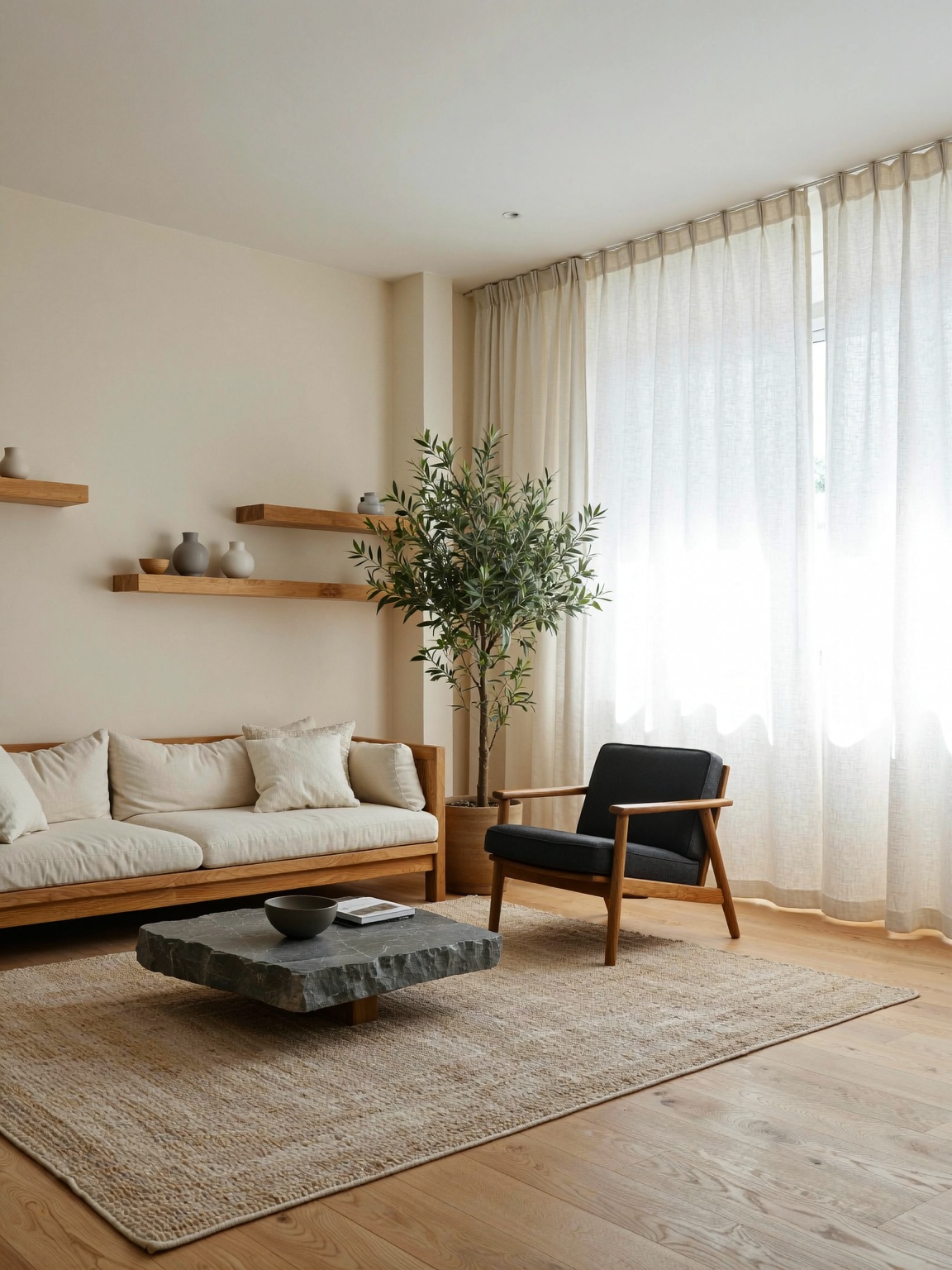
If you love the calming simplicity of Scandinavian design but are equally drawn to the soulful warmth of Japanese interiors, there’s one aesthetic that blends both worlds perfectly — Japandi style. It’s minimal without being sterile, cozy without clutter, and beautifully curated yet deeply functional. In a world that feels busier than ever, Japandi design has become a visual exhale — warm wood, clean lines, neutral colors, handmade pottery, light linens, soft sunlight, everything has a purpose, and nothing is unnecessarily loud.
In this complete guide, you’ll learn exactly what Japandi style is, how it started, the color palette, furniture choices, materials to use, room-by-room tips, mistakes to avoid, and see imagery to inspire your next room refresh.

What Is Japandi Style?
Japandi is a fusion of Japanese wabi-sabi philosophy and Scandinavian hygge design. It balances the imperfect beauty of nature and craftsmanship (Japan) with the warm, functional simplicity of Nordic living (Scandinavia). Think low furniture, warm oak, linen textiles, paper lantern lights, tatami-inspired textures, neutral tones, ceramics, and clutter-free spaces.

At its core, Japandi is:
- Minimal, but lived-in.
- Neutral, but warm.
- Imperfect, but intentional.
- Functional, but poetic.
Where Did Japandi Come From?
Though the term “Japandi” became popular around 2017, the relationship between Japan and Scandinavian design started in the late 19th century. Danish and Japanese designers admired each other’s craftsmanship — both cultures value natural materials, sustainability, and simplicity.
- Japanese Wabi-Sabi → beauty in imperfection, aging materials, handcrafting, harmony.
- Scandinavian Hygge → warmth, comfort, practicality, soft light, natural textures.
Japandi style is simply the modern interpretation of this long-lasting design friendship.

airy wood, stone, and handcrafted ceramics.
Core Elements of Japandi Design
1. Warm Minimalism
Spaces are clean and uncluttered, but not cold. Everything has a place and purpose.
2. Natural Materials
Wood, stone, linen, rattan, bamboo, clay, and handmade ceramics are essential.
3. Muted, Earthy Colors
Soft beige, warm white, greige, sand, oatmeal, stone gray, muted sage, dusty charcoal, and natural wood tones.
4. Low, Grounded Furniture
Inspired by Japanese floor culture — low sofas, platform beds, simple benches, long tables.
5. Wabi-Sabi Philosophy
Aged wood, hand-thrown pottery, visible knots, uneven glaze — beauty in imperfection.
6. Scandinavian Functionality
Hidden storage, clean cabinets, multipurpose furniture, soft textiles, cozy atmosphere.

Japandi Color Palette
| Color Style | Examples |
|---|---|
| Neutrals | Warm white, ivory, beige, oatmeal, sand |
| Woods | Ash, light oak, walnut, smoked wood |
| Accents | Charcoal, stone gray, muted black |
| Naturals | Sage, olive, clay, terracotta, taupe |
Colors are matte, desaturated, and nature-inspired — no glossy finishes or overly bright tones. A Japandi home feels like a quiet morning: soft light, gentle warmth, and muted contrasts.
Textures & Materials in Japandi Design
The beauty of Japandi comes alive in natural textures — even if your palette is neutral.
Key Materials
- Light oak, pine, or walnut wood
- Linen, cotton, wool throw blankets
- Tatami mat-inspired weaves, jute rugs
- Ceramic vases, hand-thrown mugs
- Stoneware bowls, raw concrete
- Rice paper lamps, shoji screens
- Hammered metal trays or matte black hardware

Mix smooth and rough textures: linen next to stone, oak next to woven baskets. This contrast creates depth without relying on color.
Furniture Principles

Low + Linear
Japandi furniture often sits lower to the ground to bring calm visual flow.
Clean Lines
No excessive ornamentation — furniture is simple, sculptural, slightly rounded edges.
Functional & Sustainable
Solid wood over veneer. Built-to-last craftsmanship over trends.

What to Look For:
- Low platform bed with linen bedding
- Linen or cotton upholstered sofa with wooden legs
- Slim oak dining table + minimalist chairs
- Black metal or paper lantern floor lamps
- Built-in cabinets, floating shelves, hidden storage
Japandi Room-by-Room Design Guide
Living Room
This is often the heart of a Japandi home — open, bright, airy, and calming.
- Neutral sofa with wooden base
- Low coffee table (light wood or stone)
- Linen curtains, floor-to-ceiling
- Paper lantern pendant or cone-shaped linen lampshade
- Ceramic vessels with dried stems or branches
- One large statement artwork (minimalist or ink-style)

Kitchen & Dining
- Flat-front cabinets in light wood or matte taupe
- Open shelving with neatly stacked ceramics
- Stone, concrete, or quartz countertop
- Scandinavian wishbone chairs or Japanese-style stools
- Clay bowls, wooden cutting boards, linen napkins
- Minimal pendant lighting over island or dining table

Bedroom
- Platform bed or futon-style frame
- Neutral linen duvet, layered cotton throws
- Shoji-style closet doors or natural woven headboard
- Sculptural bedside lamp, neutral ceramic vase
- Hidden storage to keep surfaces clear

Bathroom
- Large stone or microcement walls
- Floating wood vanity with slim sink
- Freestanding soaking tub or wet room shower
- Matte black or brushed brass fixtures
- Wooden stool with rolled towels, eucalyptus branch
- Handcrafted soap dishes or ceramic trays

Common Japandi Mistakes to Avoid
| Mistake | Better Approach |
|---|---|
| Too much white → looks sterile | Use warm beige, cream, sand tones |
| Buying only IKEA basics | Mix IKEA with handcrafted, vintage, or solid wood |
| Over-decorating minimal spaces | Leave negative space — let pieces breathe |
| Using shiny or plastic materials | Choose matte, natural, textured finishes |
| Cluttered countertops | Use baskets, built-ins, drawers to hide items |
Step-by-Step: How to Start Creating a Japandi Home
- Declutter First — Remove what you don’t need. Keep only items that are functional or meaningful.
- Choose a Color Base — Pick 3–4 tones: warm beige, oak wood, linen white, soft gray.
- Invest in Key Pieces — Sofa, bed, dining table. Keep them low, wood-based, and neutral.
- Layer Textures — Linen, wool, rattan, stone, raw pottery.
- Add Organic Decor — Ceramic vases, handmade bowls, dried branches, paper lantern lighting.
- Add Greenery the Japandi Way — One potted olive tree, eucalyptus in a vase, or bare branch in water.
- Maintain Negative Space — Don’t fill every corner. Let the room breathe.


Conclusion: Why Japandi Style Endures
Japandi is more than an interior design trend — it’s a lifestyle rooted in calm, intentional living. It invites you to slow down, notice the little things, and build a home that supports peace instead of chaos. In a fast-paced world, Japandi makes home feel like a quiet, sunlit retreat.
